Winter Wind-Load Resistance & Stack Pressure in Canadian Commercial Entrances
How thermodynamic chimney effects, high seasonal wind shear, and negative lobby pressure cause inferior door operators to fail, and how helical gearboxes solve latch resistance.
- The Stack Effect: Rising heated air inside high-rise elevator shafts and stairwells creates immense negative suction at ground floor vestibules, resisting door closure.
- Dynamic Microprocessor Wind Compensation: Monitors back-EMF and motor resistance in real time, modulating power output to overcome wind gusts without slamming.
- Helical Steel Gearboxes: Precision-milled helical gears distribute tooth load across multiple contact points, eliminating gear stripping under heavy seasonal gusts.
- Adjustable Spring Assist: Provides fail-safe mechanical closing force even during winter electrical power grid blackouts.
Canadian commercial buildings face severe seasonal challenges. From sub-zero winter temperatures in Ontario, Alberta, and Quebec to intense exterior wind gusts, building entrances are subjected to severe thermodynamic forces.
The most prevalent cause of commercial automatic swing door malfunction in winter is not electrical breakdown—it is building stack pressure and exterior wind load.
1. Understanding the Stack Effect in Commercial Buildings
The stack effect (or chimney effect) occurs when indoor air is heated during winter months. As warm indoor air rises up elevator shafts, stairwells, and mechanical risers toward the roof, it creates lower atmospheric pressure at ground floor entrances.
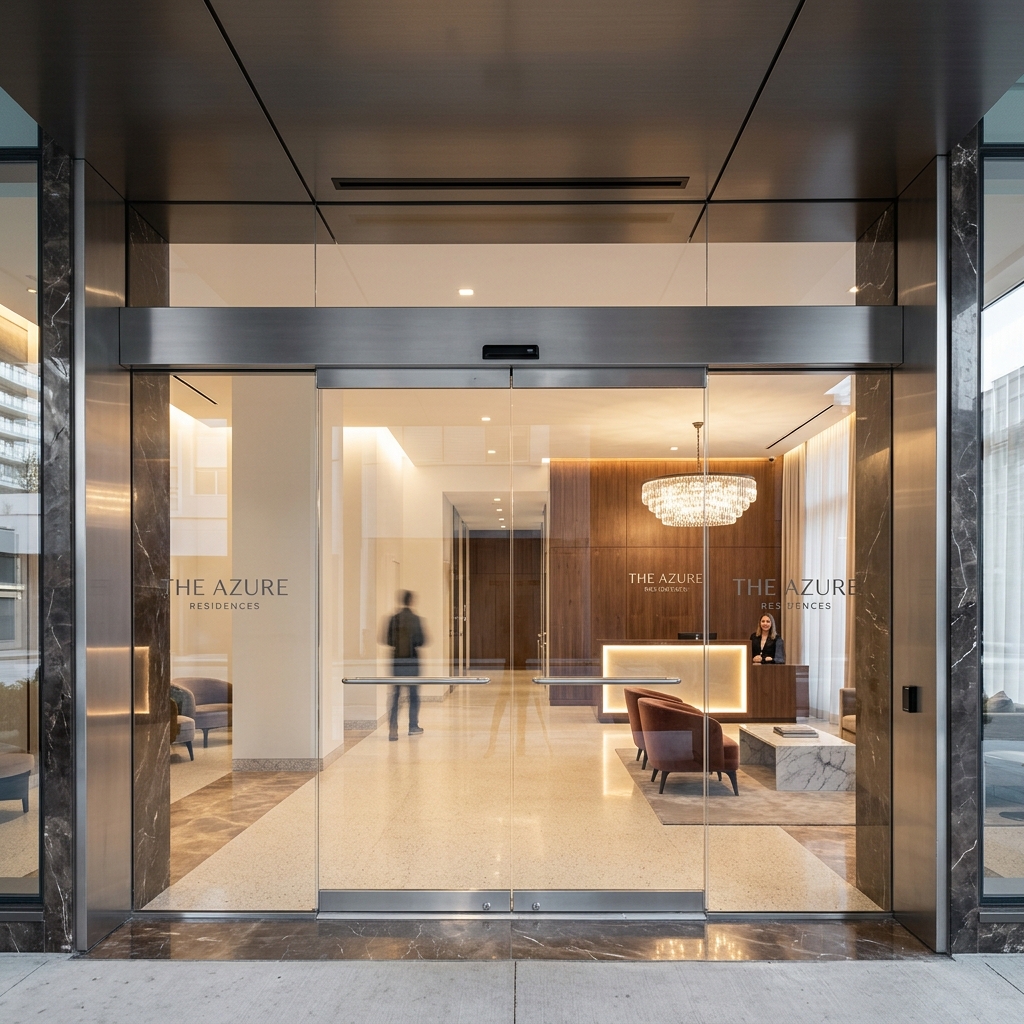
This pressure differential acts as an immense vacuum, pulling cold exterior air inward through vestibules and lobby entrances. When an automatic swing door opens outward, it must push against this incoming rush of air; when it attempts to close, the negative pressure can either suck the door open or hold it ajar by several inches, preventing positive latching.
2. How Omega Solves Canadian Winter Challenges
Unlike generic imported operators with lightweight planetary gearboxes, Omega Automatics' OA100 Series (Surface Mount and Bottom-Load Concealed) is engineered specifically for severe-duty Canadian deployments:
- 1. Hardened Helical Steel Gear Train: Helical gears provide superior tooth engagement and mechanical advantage, withstanding continuous aerodynamic resistance without gear teeth fracturing.
- 2. Dynamic Wind Compensation: The digital microprocessor continuously measures motor RPM and back-EMF. If sudden wind gusts impede closure, the controller dynamically modulates torque to ensure the door latches securely while remaining within ANSI low-energy safety thresholds.
- 3. Heavy-Duty Adjustable Spring Close: A robust mechanical spring provides fail-safe closing even during building power blackouts.
- 4. Low-Temperature Operating Range: Factory-tested to perform reliably at temperatures as low as −35°C without fluid viscosity slowdowns.
3. Architectural Vestibule Design Best Practices
To complement high-torque automatic operators, architectural specifiers should observe the following entryway design recommendations:
- Staggered Door Openings: Position exterior and interior vestibule doors offset from each other to prevent direct wind tunnels.
- Vestibule Air Locks: Program door operators with sequential delay interlocks, ensuring the exterior door completes its closing cycle before the interior door opens.
- Heated Air Curtains: Install downward air curtains above exterior door headers to neutralize pressure differentials before they reach the door leaf.
Specify Severe-Duty Canadian Door Automation
Our engineering division provides customized wind-load assessments and transom installation details for high-rise condominiums, hospitals, and transit hubs across Canada.